ARMCHAIR CRITICS HAVE NO CASE AGAINST #OPENNSFAS BY MILA ZIBI

“We must make it a culture to support anything that aims to advance the life of a Black child, even if it is not coming from a certain political party or organisation.”

27 JANUARY 2020

#OpenNSFAS, a non-partisan campaign flooded social media and added to the national discourse on higher education this past week, calling for national government to instruct NSFAS to reopen applications for those students who have acceptance letters from tertiary institutions through late applications. Equally, for those who applied on time and those who could not apply for NSFAS due to various socioeconomic and technological reasons. #OpenNSFAS also emphasised the need for NSFAS to respond to the many poor prospective students who have not been responded to, whilst registration at many tertiary institutions has commenced. 

Indeed the campaign became a success when on the 23rd of January 2020, Minister of Higher Education, Science and Technology, Dr Blade Nzimande, announced that NSFAS is “not closed for those who will be accepted at universities and colleges who might not have applied for NSFAS assistance” and also that, “NSFAS qualifying students will not pay any registration or upfront fees in 2020,” despite prior arrogant statements declaring that NSFAS would not reopen, and insinuating needy students were lazy, entitled and did not respect deadlines. 

During the campaign there were many armchair critics and those who did not support the campaign, deeming it a ‘sellout position’. We understand that Free Quality Decolonized Education is the ultimate solution, but whilst we are not mobilized or rather demobilized as young people to fight for Free Education, #OpenNSFAS became the immediate solution to allow the Black Youth to access Education. If left to sit at home because of no funding, we would have lost them to depression, drugs, crime, suicide, etc. 

Students will now be able to study, be qualified and grow their chances of being employed or self-employed and ultimately improve the lives of their families and communities. This was an open call for all who believed in the need to always be on the side of the masses, just like it was done during #FeesMustFall. This call would not have been possible without the social media influencers, organizations and structures that supported, and also pushed for the same call like SRC’s of different institutions, various unions and activists across the country. We will not forget those who were found wanting. We thank the media platforms that gave this campaign a chance to share the gospel and engage with learners and parents who had no other platform to voice their frustrations. 

We must make it a culture to support anything that aims to advance the life of a Black child, even if it is not coming from a certain political party or organisation. We must never seek to politicize everything and go as far as politicizing and compromising the lives of black children. When our people march for water, for housing, for electricity, we do not tell them we are busy with land expropriation. We support them and use that opportunity and that moment to conscientize people we would not ordinarily have access to. 

Those who deem this call a “sellout position” must not forget that they too wish to fight successfully for Free Education which is a plea or a fight to be ‘integrated’ into the system, and we know very well as Malcolm X taught us that, “Revolutionaries do not fight to be integrated into the system, revolutionaries overthrow systems”. The call for free education is still louder than the call for decolonised education, even from those who have ordained themselves as the messiahs of activism. 
Furthermore, we call upon all students who did not apply for NSFAS to contact NSFAS Offices or their institutions, and those who have not been responded to, to go and register at the institutions which they have acceptance letters from if they qualify for NSFAS.

May we as young people stop selling out and engaging in petty squabbles. May we mobilize ourselves and fight for one of our generational missions, which is Free Quality Decolonized Education. Young people to the front!

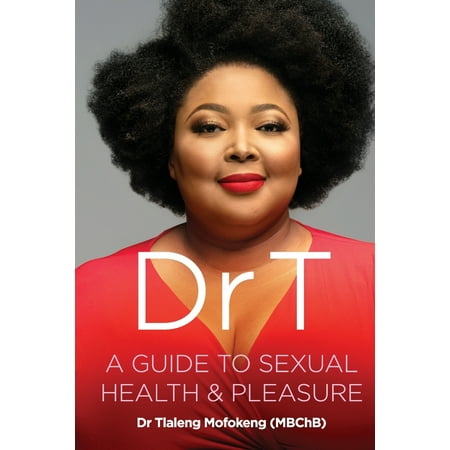
DR T: A GUIDE TO SEXUAL HEALTH AND PLEASURE – DR TLALENG MOFOKENG [BOOK REVIEW] BY NTANDO SINDANE

See the source image
“[f]aking an orgasm is very much like scoring your own goal.” 

26 JANUARY 2020

One almost did not read this book because of how it is currently sold on social media and other similar spaces; the marketing approach shows itself through Twitter chatter wherein the so-called, “Tlof Tlof revolution”, or even “Sexual pleasure revolution” is thrown around cheaply when making reference to the book and its author. The nerdy (young academic) self immediately assumes that these trendy taglines are probably telling of how shallow or trivial the actual book is. On the contrary, the text proved these preliminary assumptions wrong; after having read Dr T (the book), one is left thoroughly educated, especially as a cishet man. Once again, the cliché, “don’t judge a book by its cover” becomes contextually relevant. 

Roughly, there are a few take outs that are worth mentioning: the author speaks from the proverbial, and almost academically elusive position of a “lived experience”, her accounts on both health and pleasure questions are related to various personal experiences, these include her first interaction with menstruation, to her experiences as a junior doctor at a community clinic, and right into her personal space as a young wife, trying out for a pregnancy shortly after undergoing surgery. The “lived experience” style of writing draws the reader into appreciating the text not merely as academic but equally as an expression of the personal; thus, making Dr T a truly liberating engagement.  

The word feminist does not appear prominently throughout the chapters, and it almost does not have to, because the author’s tone, from the onset is that of unapologetically presenting the struggles facing women in communities, setting out their rights and giving a clarion call for stronger initiatives to fight against all forms of oppression against women and gendered people of this world.  

As you read through the book, you discover crucial insights about the human body, specifically its reproductive system. The first feeling that comes to one’s mind is that most of these things are so important, that they should actually be made compulsory knowledge for all adults. This lends credence to the on-going proposals by South Africa’s department of basic education to introduce sex education as a compulsory subject in our schools. It would be recommended that curriculum implementers should consider prescribing Dr T to both primary and high school learners.  

The book is divided into three sections, the first is about sexual health; Dr T discusses sexual health beginning with physiology wherein the vagina is placed on the table, dissected and interrogated for the truths about its character, the myths about its attitudes, and the superstitions that surround it. The penis is also put under microscope, explaining its physical make-up, including post-circumcision.  

Dr T proceeds to discuss menstrual health, relaying a story about her very first period. Here she discusses menstrual cups, toxic shock syndrome, premenstrual tension and the termination of pregnancy. Prior to discussing pregnancy, Dr T closes off the section on sexual health with teaching about various medical conditions related to sex, these are sexual dysfunction, painful sex, air trapping, allergy to latex, back/spinal disease, contraceptives, endometriosis, fibroids, hypertension, menopause, polycystic ovarian syndrome, sexually transmitted infections, urinary tract infections, cervical cancer, hormones, abstinence and bereavement.  

The second section is about sexual pleasure; this section begins with the author giving a personal explanation about what sparked her inquisitiveness about sex. This is followed by an exposition on sexual consent; this is by far the most important part of the book, because given South Africa’s reality of rape, GBV and femicide, it is as clear as daylight that South African men are yet to understand the meaning of consent. It is bold for Dr T to begin with consent in the section about sexual pleasure, because it shows that the genesis of pleasure is directly proportional to consent.  

She then discusses the orgasm, calling it “The Big O”, and observing that, “[f]aking an orgasm is very much like scoring your own goal.” Section 2 is concluded by brief discussions about sexual fantasy, communication during sex, sex during the period, anal sex and girl on girl action. 

The third and final section is the shortest of the three, it focuses on sexual rights, having robust discussions about sex work, and selected questions about the struggles of gendered people, as led from the front by the LGBTQIA community. In this section Dr T remarkably argues that, “sexual rights, sexual pleasure, sexual health and sexual wellbeing are all human rights.” At this point, the book links government’s poor provision to the access of “safer sex tools” to other general human rights violations. 

What makes Dr T special and unique from other books is its glossary of terms. Shortly after concluding section 3, the “glossary with a difference” does not merely explain terms used in the book, but it rather engages in the onerous task of educating the reader, providing them with a language to articulate their sex health and pleasure experiences properly.  

The glossary is followed by a health and wellness, checklist; as with usual checklists, this one serves the purpose of calling for the reader to be alert and attentive of all the changes in their body.  

Dr T uses non-verbose language to unwrite dominant narratives about sex, pleasure and everything related to it. The author deliberately focuses on the vagina, women’s health and sexual fulfilment, having noted that this is a subject that remains under-researched, even in the MBChB curriculum.